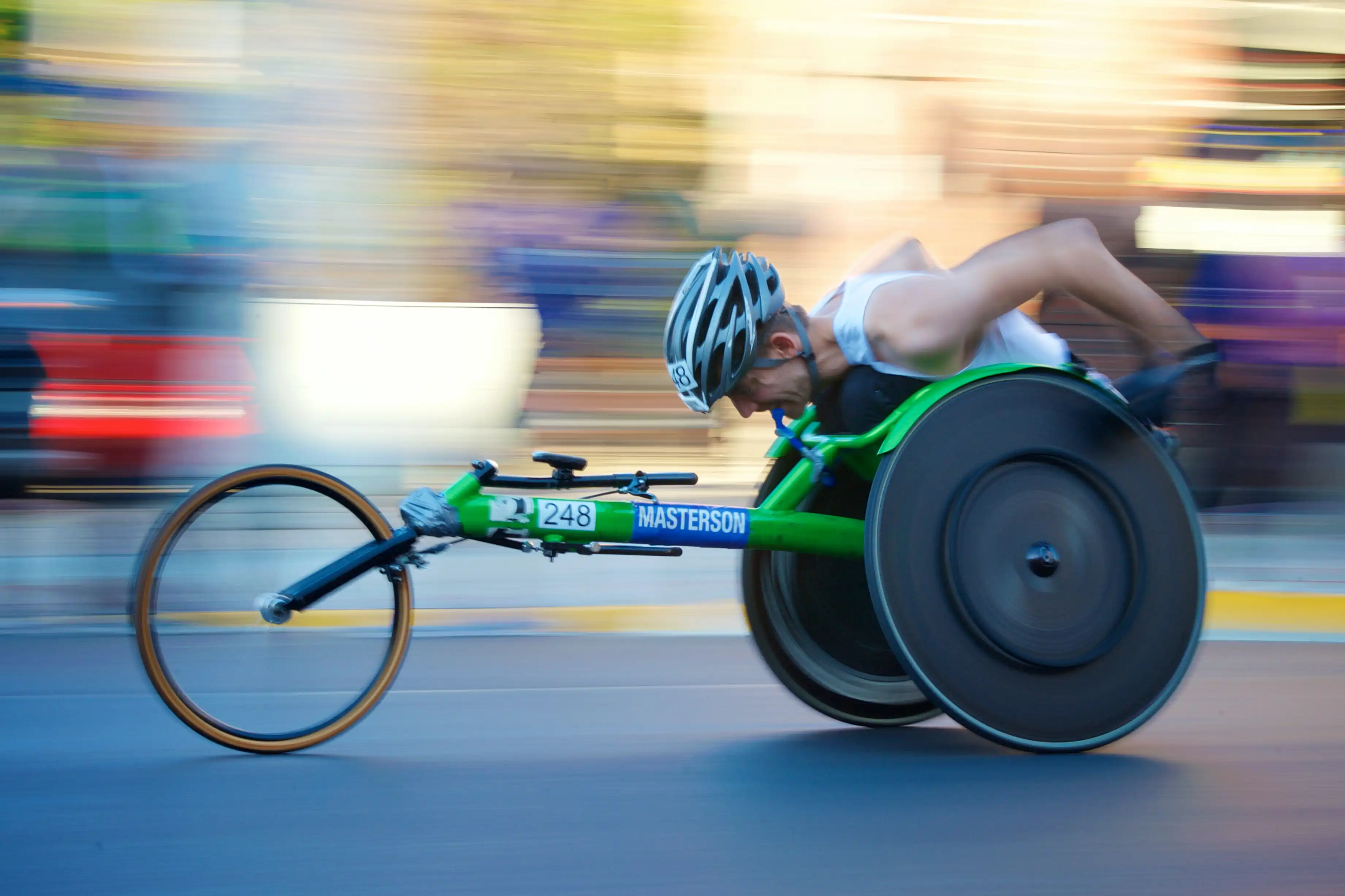
The Oita Road Roller Marathon 1983-2011

Gender differences in wheelchair marathon performance – Oita International Wheelchair Marathon from 1983 to 2011 In many studies, the performance of swimmers, cyclists, runners and triathlets has already been studied, but nobody has studied how racing roller trips have developed over time. In Japanese Oita, the traditional, Oita International Wheelchair Marathon will take place.For the period 1983 to 2011, we examined the performance of wheelchair users and the difference between men and women. The results can be found under https://www.dovepress.com/gender-differences-in-wheelchair-marathon-performance-ndash-oita-erformance-reviewed-fulltext-article-oajsm

Read more
Where do the best Double Iron Triathlen come from?

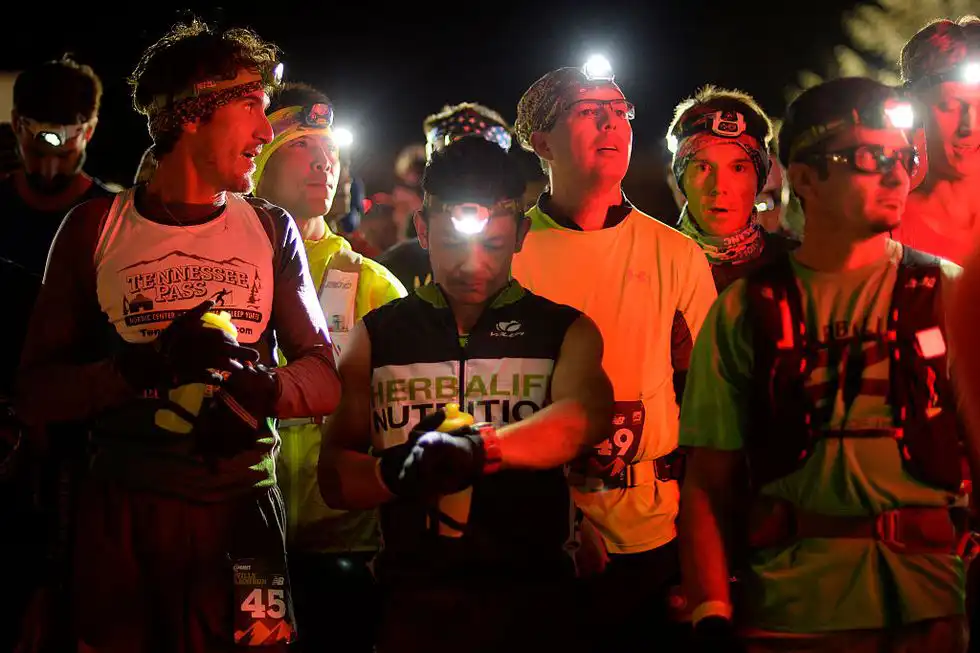
Central European triathletes dominate Double Iron ultratriathlon – analysis of participation and performance 1985–2011 In 1985, the first Double Iron Ultratriathlon in Huntsville, USA, was held.By the end of 2011, total 1,490 finishers reached the goal of such a competition.The finishers were mostly from Europe and the USA. The number of Europeans like the American took over the years, with the number of American men did not rise.Above all, starters from Europe were able to improve their performance over the last few years, which concerns the total time and the section times. The details can be found under https://www.dovepress.com/central-european-triathlets-dominate-double-iron-Ultratratriathlon-ndash-peer-reviewed-fulltext-article-oajsm

Read more

Change in skin fold thickness at 100 km runners

Changes in single skinfold thickness in 100 km ultramarathoners It is well known that long to very long endurance charges lead to a decrease in body fat.It comes to a decrease in the subcutaneous grease layer, whereby no one has been investigating which skin fold thicknesses remove the most. We studied at 219 100 km runners at which parts of the body remove the skin folds. After 100 km, the runners decreased only 0.2 kg to fat, while the muscle mass returned by 0.7 kg.The skin folds adopted at the upper body (transition shoulder to chest) by 0.1%, at the waist by 1.8% and at the calendar by 0.8%. The percentage decrease in the skin fold thickness was smaller than long-distance wheels or long-distance swimmer was found. All numbers can be found under https://www.dovepress.com/changes-in-single-skinfold-thickness-in-100-km-ultramarathoners-peers-Reviewed-fulltext-article-oajsm

Read more

Marathon in the climate chamber

Running a marathon from -45°C to +55°C in a climate chamber: a case study The German extreme sportsman Marcel Heinig has run a marathon in the climate chamber and overcome the temperature difference of 100 ° C.Start was at - 45 ° C and the end at + 55 ° C. Previous and during the marathon various blood and urine values were determined as well as the body temperature on the surface and in the body interior measured.The body core temperature remained constant while the temperatures on the body surface made massive fluctuations. The laboratory values showed a massive increase in growth hormone (+ 391%), prolactin (+ 221%), Renin (+ 1145%) and Aldosterone (313%). All results can be found under https://www.dovepress.com/running-a-marathon-from–45degc-co-55degc-in-a-climate-chamber-a-case–peer-reviewed-FullText-Article OAJSM

Read more

Comparison marathon runners and 24-hour runners

Comparison of anthropometric and training characteristics between recreational male marathoners and 24-hour ultramarathoners For 24-hour runners, the personal marathon best time is an important variable to estimate the mileage on the competition. The probability that between marathon runners and 24-hour runners similarities between physique and training should be high.We have therefore compared marathon runners and 24-hour runners regarding training and physique. The 24-hour runners were older than the marathon runners, had thinner sizes and thinner skin folds at several points of the body.Regarding training, the Ultralaufen completed more kilometers but at lower speed.

Read more

update Scopus database

Under https://www.scopus.com/home.uri one can for oneAuthors to show the publications. From me 149 work registered. Am häufigsten zitiert wurden bisher Knechtle B, Müller G, Willmann F, Kotteck K, Eser P, Knecht H. Fat oxidation in men and women endurance athletes in running and cycling. International Journal of Sports Medicine 25:38-44, 2004 (47x), dann Knechtle B, Enggist A, Jehle T. Energy turnover at the Race across America (RAAM). International Journal of Sports Medicine 26:499-503, 2005 (41x), dann Bircher S, Enggist A, Jehle T, Knechtle B. Effects of an extreme endurance race on energy balance and body composition - a case report. Journal of Sports Science and Medicine 5:154-162, 2006 (37x), und Twerenbold R, Knechtle B, Kakebeeke TH, Eser P, Müller G, von Arx P, Knecht H. Effects of different sodium concentrations in replacement fluids during prolonged exercise in women. British Journal of Sports Medicine 37:300-303, 2003 (34x). These are working sometimes for many years, the new works have been quoted only a few times.

Read more

Old and performance with ultra-triathlets

Age-related changes in ultra-triathlon performances We have examined the relationship between age and performance of 423 male triple Iron ultra-triathlets and 119 male Deca Iron Ultra Triathlen over the period from 1992 to 2010. The age of the finisher in the Deca Iron was higher with 41.3 ± 3.1 years than the age of the finisher in Triple Iron with 38.5 ± 3.3 years. On the other hand, the fastest times between the ages of 25 and 44 were achieved on both routes.

Read more

Comparison Ironman triathlets and marathon runners

Comparison between recreational male ironman triathletes and marathon runners The marathon best time is a significant variable for male Ironman triathlets.We now have Ironman triathlets and marathon runners compared to whether Ironman Triathlen are similar to marathon runners.

The triathlets were greater and heavier than the marathon runners and had a thicker skin fold on the calf. In addition, triathlets completed a significantly higher training volume than the runners.The percentage of body fat was correlated with the triathlets with the total time and the section times for cycling and running.The weekly swimming kilometers correlated with the floating time and the speed in cycling correlated with the bike time in the race. At the marathon runners, the thickness of the skin folds were associated at the calf as well as the running speed in training with the marathon period.Although the marathon best time is a significant variable for male Ironman triathlets, there are significant differences between triathlets and marathon runners. The details can be found under https://pubmed.ncbi.nlm.nih.gov/23033763/

Read more

Participation and performance at Triple Iron Ultratriathlon

Participation and Performance Trends in Triple Iron Ultra-triathlon - a Cross-sectional and Longitudinal Data Analysis We have studied the development of participation and performance as well as the gender differences of all Triple Iron Ultratriardlons (11.4 km Swimming, 540 km cycling and 126.6 km) from the first race in 1988 to 2011. During this period, 824 men and 80 women have seen such a competition.Over the years, men became faster, the women, however, slower. The percentage difference in the performance of the sexes for the fastest athletes increased significantly from 10% in 1992 to 42% in 2011. The summary can be found under https://pubmed.ncbi.nlm.nih.gov/23012633/

Read more