Differences of women and men in endurance sports

Metronome: a word to put in the feminine? Studies in the field of sports physiology relate to most common men, preferably young and healthy men. Against this trend, the Swiss Physiologist Beat Knechtle examines the performance of women in many of his work, which distinguishes them from those of men and the reasons for this singularity. The whole evaluation can be found under https://www.widermag.com/coaching-metronome-mot-mettre-feminin

Read more

Children and adolescents in the ultramarathon

Age-related Participation and Performance Trends of Children and Adolescents in Ultramarathon Running Trends of participation and performance as well as the performance differences between the sexes in ultra-run were well described in the adult population. For adolescent ultramarathon runners, however, there were less information about such trends. The aim of the present study was to investigate the age-related participation and the performance trends of children and adolescents ultramarathon runners.Data from runners under 19 years, which participated from 1960 to 2018 at distance-limited ultramarathons of 50 km, 100 km, 50 miles and 100 miles, were analyzed.During this time, the number of participants increased, especially in boys, most runners came from Europe, and the 50- and 100 km racetracks were most popular. Overall, male runners were faster than female runners, except in the case of European and Oceanic origin, where girls were faster over the 50 km race. The fastest male runners came from Africa and the fastest girls from Oceania, and the average running speed has fallen sharply for both sexes over the calendar years.

Read more

The influence of an ultramarathon on the heart of middle-aged men

Effects of Super-ultramarathon Running on Cardiac Structure and Function in Middle-aged Men It remains unclear whether high-intensity loads lead to deformities and a reduced function of the heart muscle. This study stated the hypothesis that participants of a six-day super-ultramarathone (622 km) would show asleep serial changes in the heart structure and function before and after the marathon as well as during the recovery phase. The heart structure and function of male volunteers of middle-aged age was examined before and after the ultramarathon as well as in two recreational periods in spacing three days by echocardiography. There were no differences in the left ventricular end-diastolic and end-systolic dimensions and in the end diastolic volume between before and after the ultramarathone.The thickness of the interventricular septum, the thickness of the left ventricular rear wall, the left ventricular mass and mass index significantly increased according to the ultramarathone compared to the ultramarathone decreased during the recovery phase. The impact volume and the left ventricular ejection fraction significantly decreased according to the ultramarathone, while both values increase during the recovery phase. There were no significant differences in the indexes for left ventricular relaxation in each valuation period.

Read more

Thoracic pain in an ultra-rider

Chest pain in an elite master ultra-marathon runner: a case report with a follow-up on his subsequent athletic activity The ultra-marathon run enjoys increasing popularity, and the number of master ultra-marathon runners is growing annually. This study shows a case of a 51-year-old, very experienced long-distance runner (body mass 65.1 kg, height 168 cm), which participated in 2010 at a 48-hour ultra-marathon race, but due to acute heart problems after 16 hours anda distance from 129 km from the race. Two weeks after the race, an intensive heart examination was conducted to explain the failure due to chest pain. An electrocardiogram with 12 derivatives, a transthoracic 2D echocardiography in 3 apical projections of the left ventricle, a computed tomography of the breast, an invasive coronary angiography and a maximum oxygen intake test were carried out.The 12-channel ECG showed a negative T-wave in III and AVF without morphological abnormalities.The echocardiographic examinations showed a normal size and function of the heart chambers as well as a normal structure and function of the flaps.Only a trivial mitral and tricuspidal insufficiency was observed. The invasive coronary angiography showed - due to increased calcium value in the CT - only a non-significant systolic dynamic constriction in the eighth segment of the left anterior descending artery due to a muscle bridge.

Read more

How reliable are your own information of weight and size during runners?

Validity of Recreational Marathon Runners’ Self-Reported Anthropometric Data While studies on large samples of leisure runners often supported the values of size and weight specified by the participants themselves, the validity of this data for this population was not investigated. This study has therefore tried to investigate the validity of self-stated anthropometric measures for leisure marathons. Female (n = 32) and male (n = 135) Leisure marathon runners were asked to appreciate their weight and their height and we calculated their self-reported BMI.After that, we took real measurements of weight and height and calculated their actual BMI.The values registered by the participants themselves underestimated their actual weight by 0.65 kg and their actual BMI by 0.35 kg / m2. There was a significant interaction for the gender for both body mass and BMI, as women underestimated their weight more than men. The participants overestimated their size by 0.44 cm, but the interaction of gender and size was statistically not significant.The underestimation of the weight correlated with the speed in the marathon and the body fat content in men, but not in women.

Read more

The women in ultra-bike races

Can the Performance Gap between Women and Men be Reduced in Ultra-Cycling? This study examined a large data set of ultra-cycling racing results to examine the gender difference in ultra-cycling performance (100 to 500 miles) after age and renowning distance. Data from the period 1996-2018 were retrieved from the database of the Ultra-Cycling Marathon Association (UMCA), including distance-limiting ultra-cycling races (100, 200, 400 and 500 miles). A total of 12,716 racing results were analyzed to compare the performance between men and women after calendar year, age group (18-34, 35-44, 45-59 and 60+ years) and RenDistance.Men were faster than women in 100 and 200 miles races than women, but with the 400 and 500 miles races, no gender differences were found. The performance ratio (average cyclist / average cyclists) was lower in the 200 miles races compared to the 100-mile races and remained stable for the 400 and 500 miles races.

Read more

Pacing in swimming with Masterathlen

Pacing in World-Class Age Group Swimmers in 100 and 200 m Freestyle, Backstroke, Breaststroke, and Butterfly The pacing for swimming was investigated in the pool swimming for freestyle in elite pigs as well as master’s swimming, over the pacing in master squids, which compete on world class level in the back swimming, breast swimming and dolphin, but little is known. The aim of this study was to investigate the pacing of master squids that approached in the four individual disciplines (freestyle, back, chest and dolphin) on world-class level at 100 and 200 m. Data was analyzed at 18,187 finishers who participated in four Fina Champion Championships between 2014 and 2019.The sample comprised 3,334 women and 14'853 men. The swimming speed decreased with increasing age.Freestyle was the fastest and bundle swimming the slowest style.Women and men were in 100 m faster than in 200 meters. Back was the style with the lowest and dolphin with the highest variation coefficient of the swimming speed.100 meters had a higher variation coefficient in the swimming speed as a breast swimming.In the second round, the swimming speed for 100 m decreased for all styles and all ages.For 200 m, the swimming speed in the first round was the fastest for all styles and all ages.

Read more

Are women faster than men swimming?

Sex Differences in Swimming Disciplines—Can Women Outperform Men in Swimming? In recent years, the interest of female dominance has increased by long-distance swimming, publishing several newspaper articles in which the performance and dominance of women was speculated - especially when the ultra-distance swimming in open water. The aim of this overview is to check the scientific literature in relation to the difference between the sexes for all swimming styles (dolphin, back swimming, breast swimming, freestyle and layer swimming), different distances (sprint to ultra). Extreme conditions (cold water), different age and swim integrated in multi-port disciplines such as triathlon, in different age groups and the course of calendar years were also taken into account. The influence of different physiological, psychological, anthropomometric and biomechanical aspects for the possible explanation of female dominance was also discussed. The databases Scopus and PubMed were searched until April 2020.Mainly long-range floats were examined in the open waters and pool swimmer of different ages and performance levels. For long-distance swimmers in the open waters of the ‘Triple Crown of Open Water Swimming’ with the ‘Catalina Channel Swim’, the ‘English Channel Swim’ and the ‘Manhattan Island Marathon Swim’, women were about 0.06 km / h faster than men. In master swimming (age groups from 25 to 29 to 90 to 94 years), which participated in the FINA World Cup in Pool Swimming in Freestil, Back, Dolphin, Chest, Layers and 3000-M Open, showed that female master swimmers are ableare to achieve similar achievements like men in the oldest age groups (older than 75-80 years). At boys and girls aged 5 to 18 years - and the 100 best freestyle swimming services of the US from 50 m to 1500 meters - the five fastest girls until the age of “were faster than the five fastest boys.After the age of 10 and until the age of 17, however, boys were increasingly faster than girls. Therefore, women tended to reduce the existing gender differences in certain age groups (younger than 10 years and older than 75-80 years) when swimming in the pool or even exceeding long-haul swimming in open water (distances of “30 km), in particularUnder extreme weather conditions (water colder than \ ~ 20 ° C).

Read more
The meaning of the skin fold thickness at marathon runners

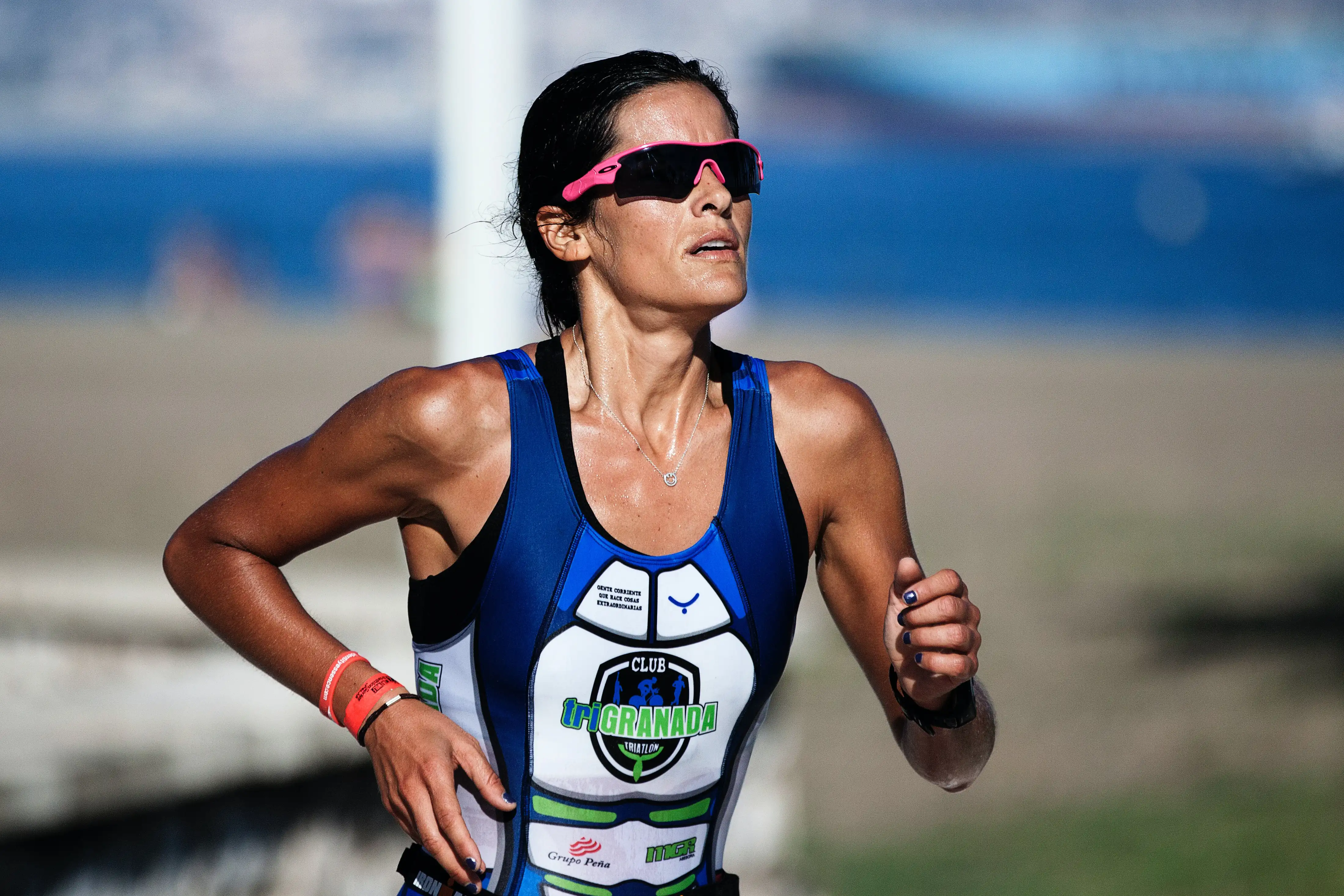
Skinfold Thickness Distribution in Recreational Marathon Runners The relationship of the body fat percentage to the performance of elite marathon runners was well examined.However, there are less information about the variation of the skin fold thickness after gender and performance at non-elite marathon runners available. The aim of the present study was to examine the variation of the skin fold thickness after gender and performance in leisure marathon runners. Participants belonged to 32 female (age 40.1 ± 9.0 years, body fat 19.6 ± 4.7% and training volume 47.7 ± 22.6 km) and 134 male marathon runners (age 44.3 ± 8.8Years, body fat 17.6 ± 4.0% and exercise volume 53.0 ± 21.2 km). The biggest skin fold thickness was the stomach in both sexes, while the smallest of the biceps in men and the chin was in women.The largest gender-specific difference in the thickness of the skin folds was observed in triceps, where the skin fold was thickest in women.The biggest difference in the skin fold thickness between the men’s power groups was observed on the Beckenkamm and the smallest on the patella and the proximal calf.

Read more