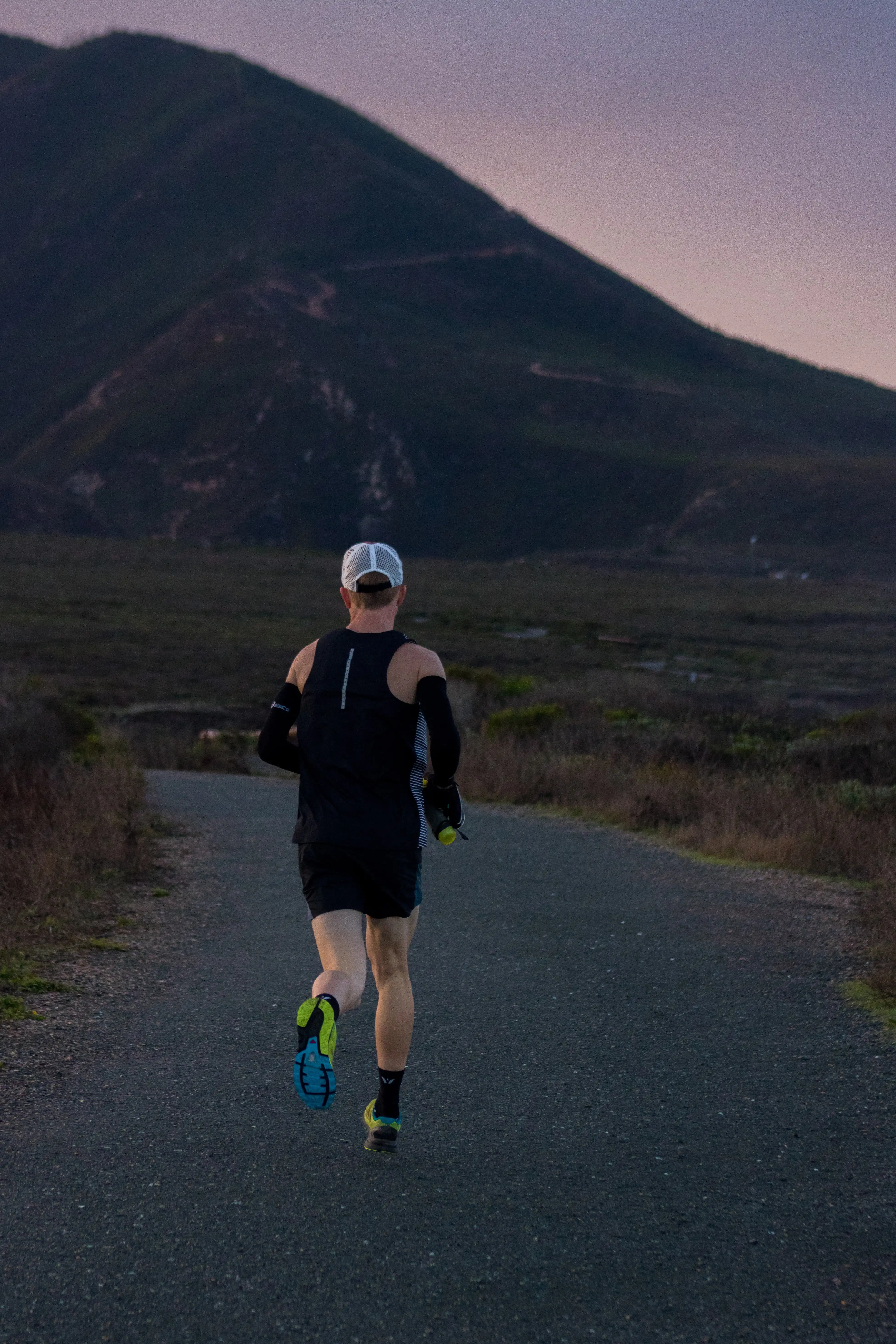
Pacing and Changes in Body Composition in 48 h Ultra-Endurance Running—A Case Study The pacing was examined for elite and master runners, which participate in marathon and ultra-marathon races up to 100 km and 100 miles, but not for longer ultra-marathons. In this case study, a 54-year-old ultramarathon runner was investigated, which wanted to achieve as many kilometers as possible in 48 hours. The changes in running speed during the race and selected anthropometric properties (body mass and body water) using the analysis of bioelectric impedance during and after the race were analyzed. The runner achieved a total distance of 230 km and the running speed did not take on linear during the race. Body weight decreased while the percentage of body water rose over the race non-linear.
There was no statistically significant relationship between the decrease in body mass and the increase in body water in percent. In view of the popularity of ultra-long-distance races, the results of the present study delivered valuable insights into the pace and the change in body mass and body water during a 48-hour run. The case report can be found under https://www.mdpi.com/2075-4663/6/4/136/htm