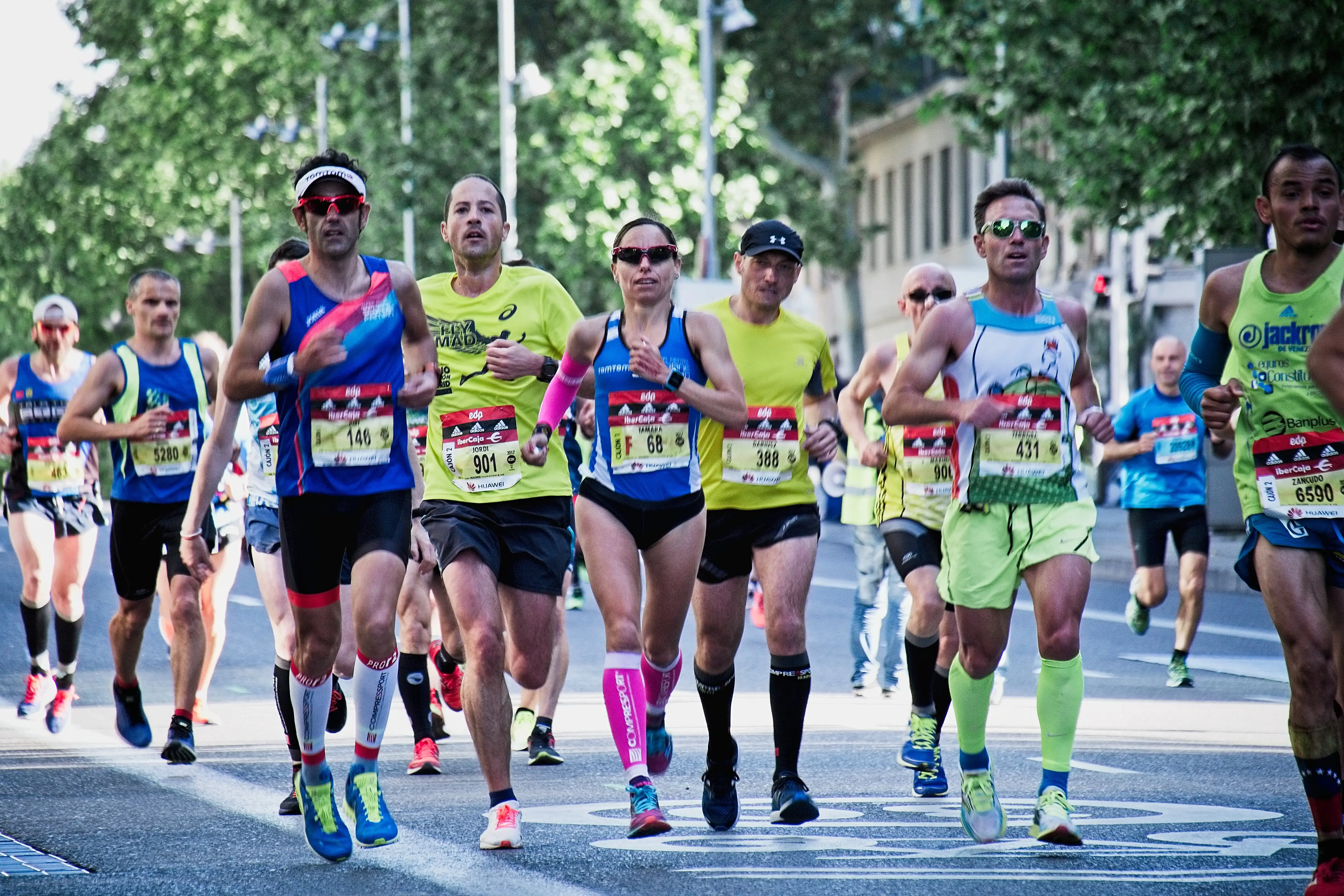
Pacing in Long-Distance Running: Sex and Age Differences in 10-km Race and Marathon The recent availability of data from mass participation volumes has made it possible for researchers to examine the pace from the perspective of non-elite spacers. Based on a comprehensive analysis of the literature, we concluded that no study that uses data on mass participation events has ever compared the speed of the 10 km race directly to other long-distance races. Therefore, the main objective of this study was evaluating and comparing the pacing between 10 km runners and marathon runners in terms of their sex and ages. For the purposes of this study, official results of the Oslo Marathon (n = 8,828) and 10-KM race (n = 16'315) were taken into account from 2015 to 2018.Both 10 km runners and marathon runners showed a positive pacing. In addition, a two-way variance analysis showed that women at the marathon were less likely to slower than men (9.85% compared to 12.70%), but not at the 10 km race (3.99% compared to 3.38%). Finally, tempo changes in the youngest and oldest marathon runners compared to the other age groups are more pronounced (12.55% compared to 10.96%).
Based on these findings, different training programs for marathon runners should apply compared to shorter long-distance runners. The whole work can be found under https://pubmed.ncbi.nlm.nih.gov/33920504/