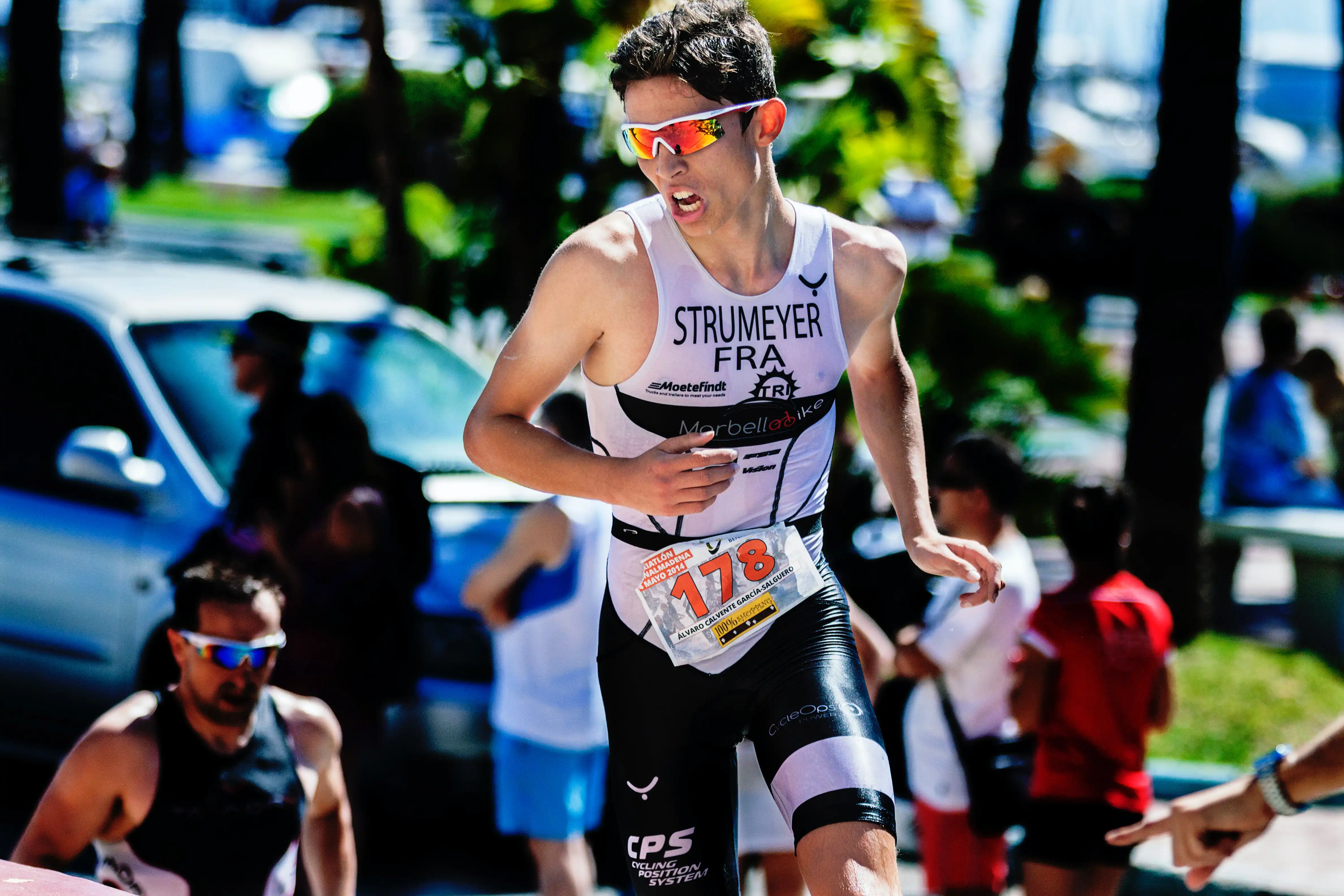
Effects of Pacing Properties on Performance in Long-Distance Running This article focuses on the performance of runners in official races. Based on extensive public data of participants in races organized by the ‘Boston Athletic Association’, how different pacing profiles can influence performance in a race. The pacing of an athlete refers to the running speed in different sections of the race. The data acquisition includes three years of data published by the racing agencies, and mainly includes times at various points that provide information about the individual runner’s speed profile. 10 km, half marathon and the marathon were taken into account with a record of 120,472 runners. Since age is a crucial but complex determinant for performance, the age effect was first modeled gender and distance-specific. High degree polynomials and used to cross validation to select models that are both accurately and sufficiently generalizable. Thereafter, a clustering of the racing profiles was performed to identify the dominant pacing profiles that select the runners. After the influences of age were compensated, a descriptive pattern mining approach has been applied to select reliable and informative aspects of the pacing that best determine optimal performance.
The mining paradigm generates relatively simple and readable patterns, so both professionals and amateurs can use the results to their advantage. The work can be found under https://pubmed.ncbi.nlm.nih.gov/30421990/