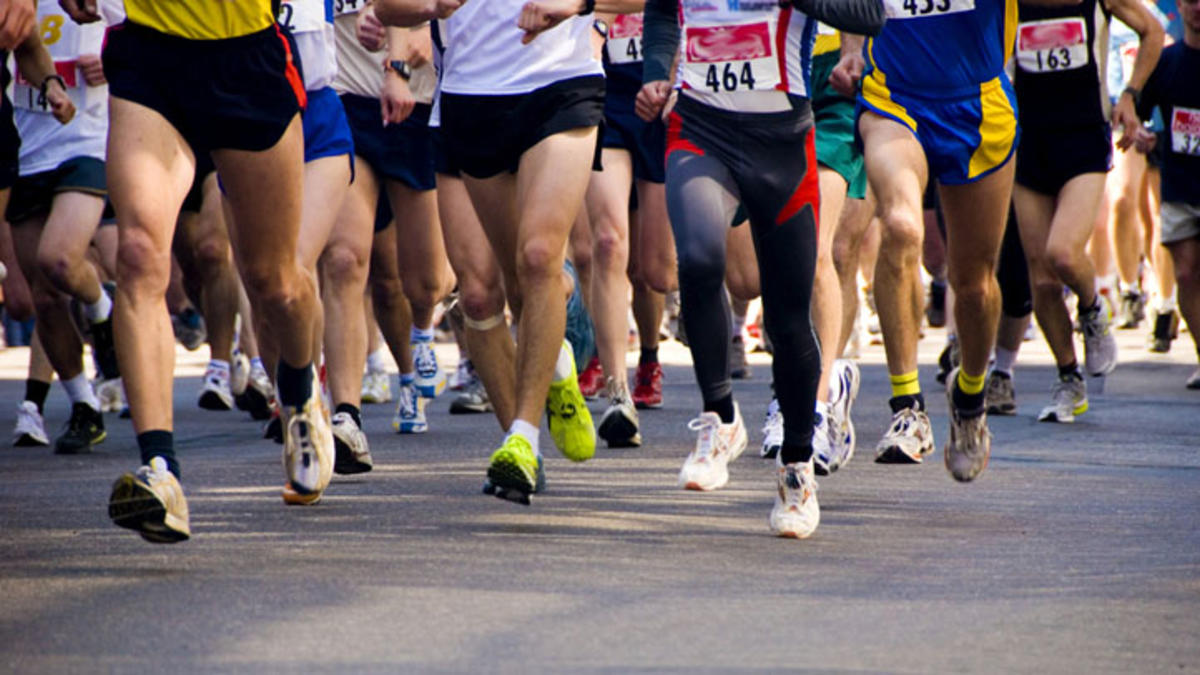
Trends in Weather Conditions and Performance by Age Groups Over the History of the Berlin Marathon The impact of various environmental conditions such as temperature, wind, air pressure and precipitation was well examined at elite marathon runners, but not according to age categories (age group marathon runners). The aim of the study was to investigate the possible influence of environmental conditions such as temperature, precipitation and air pressure on the marathon performance of marathon runners of all ages, which participated from 1974 to 2019 at the “Berlin Marathon”.A total of 869,474 finishers were analyzed (711'136 men and 158'338 women). The influence of temperature, air pressure and precipitation on the marathon times was examined in runners of the age group, which were grouped in 5-year intervals.Within the 46 years of the investigated Berlin marathons, there were no rain in 18 events rain and in 28 outlets.In 25 of the dismissals, sunshine was prevalent, while in the other 21 outputs the cloud cover prevailed. The marathon times correlated significantly and positive with age (older runners were slower than younger runners), with the correlation in men than in women.The marathon times correlated significantly and positively both with the sunshine as well as with the daily maximum temperature.The fastest marathon runners reached the fastest times on days with higher maximum temperatures (15-30 ° C). The maximum temperatures showed an impact on marathon runners of the age group of 35 to 40 years and older.Higher rainfall impaired performance in most age groups.In summary, higher daily maximum temperatures (> 15 ° C) and higher precipitation affect the performance of master marathon runners (35-40 years and older), which have participated in the “Berlin Marathon” in the last 45 years.
Master marathon runners should start at marathon races with temperatures <15 ° C and without precipitation to achieve a fast marathon time. The whole work can be found under https://www.frontiersin.org/articles/10.3389/fhys.2021.654544/full