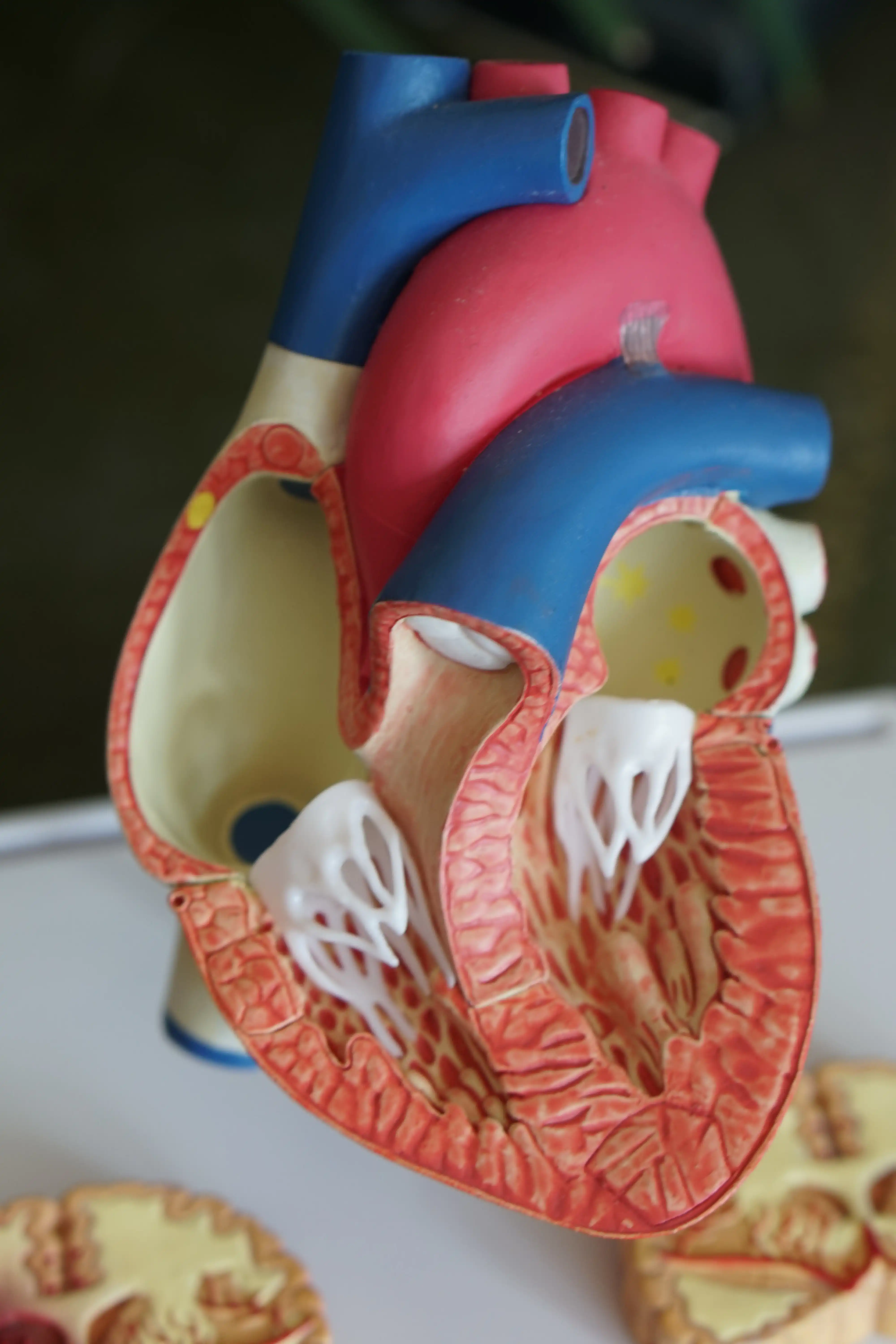
Cardiac structure and function in response to a multi-stage marathon over 4486 km The idea of the study was to investigate whether the participation in the Trans Europe Foot Race 2009, an ultramarathon race at 64 consecutive days over 4486 km led to changes in the heart structure and function. Cardiac magnetic resonance imaging was performed at 20 out of 67 participating runners (two women; medium age ± SD 47.8 ± 10.4 years) at three times (baseline scan at 294 ± 135 km (B), scan two at 1735 ± 86KM (T1) and scan three at 3370 ± 90 km (T2)) during the Trans Europe Foot Race. The imaging comprised an assessment of the left ventricular structure (mass) and function (elongation).In parallel, cardiac troponin I, NT-Pro-BNP, Myostatin and GDF11 were determined in venous blood samples. A partial sample of ten runners returned eight months after the race to a follow-up scan. The left ventricular mass increased significantly during the race (B 158.5 ± 23.8 g, T1 165.1 ± 23.2 g; T2 167 ± 24.6 g), although no significant change in the remaining structure and function detectedwould. The serum concentrations of cardiac troponin I and NT-probnp increased significantly at 1.5- or 3.5 times during the first measuring interval, without further increasing (cardial troponin I, 6.8 ± 3.1 (B), 16.9 ± 10.4 (T1) and 17.1 ± 9.7 (T2), NT-Probnp, 30.3 ± 22.8 (b), 135.9 ± 177.5 (T1)and 111.2 ± 87.3 (T2)), while the growth markers did not change myostatin and GDF11. No association with functional parameters was observed, including the ejection fraction and the volume of both ventricles. The follow-up scans showed a reduction to the baseline values (left ventricular mass 157 ± 19.3 g).
A high load-related burden on the heart volume for over two months in ultra-runners leads to a physiological structural adaptation without signs of adverse cardiovascular conversion. The whole article can be found under https://journals.sagepub.com/doi/10.1177/2047487319885035