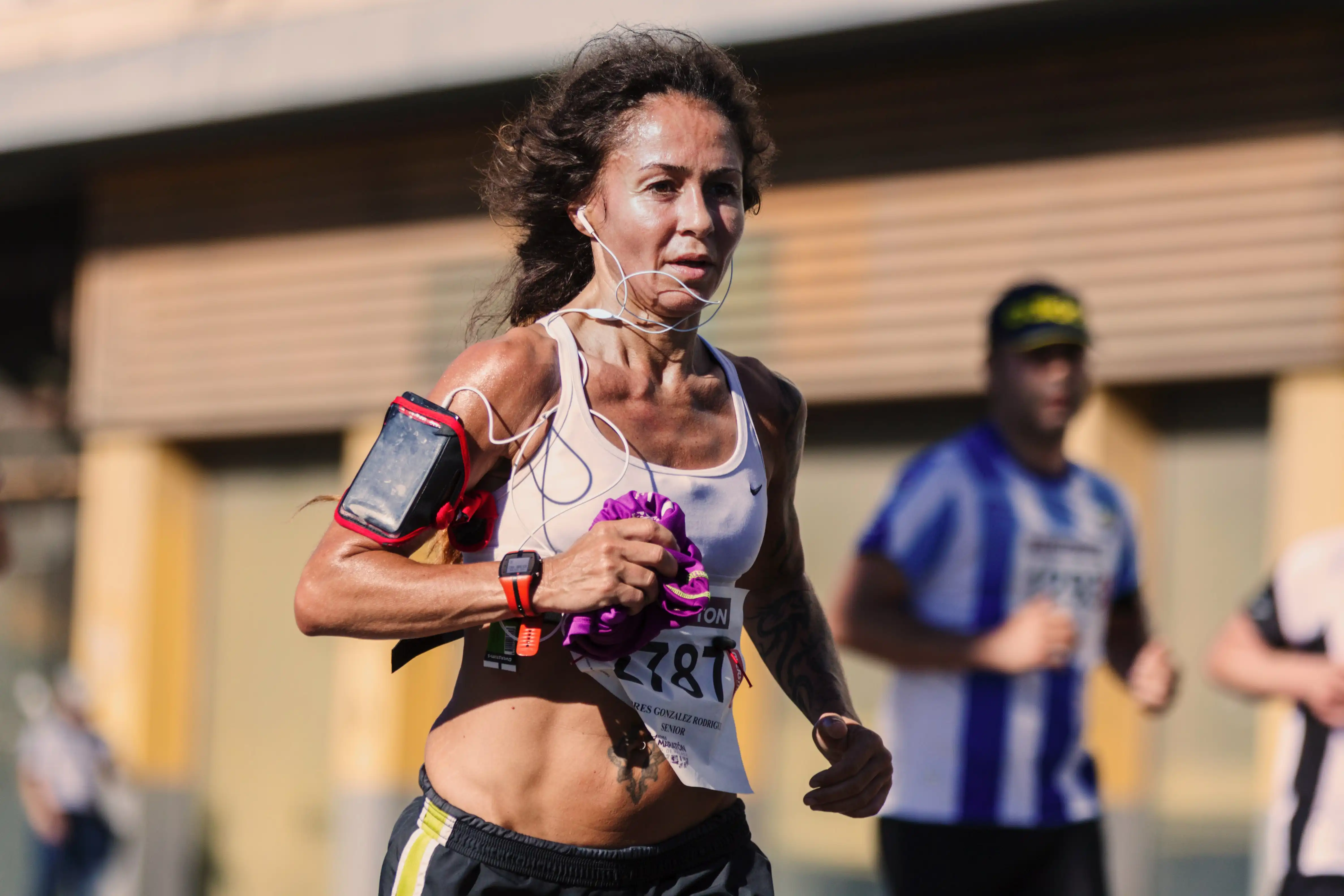
Force-Velocity Characteristics, Muscle Strength, and Flexibility in Female Recreational Marathon Runners Physical fitness components relating to the performance at the marathon, eg.As aerobic capacity and body composition, were examined in detail. On the other hand, in this sport, data on components of health-related physical fitness, such as mobility and muscle power were missing in this sport. The aim of the present study was therefore to capture force-speed (FV) properties, muscle strength and flexibility in leisure marathon runners and examine their relationship to age, race time and anthropometric properties (body fat, fat-free mass) for fat-free mass (FFM) and total cross-section of the thigh muscles (CSA). Thirty-Thirty female marathon runners (age 40.0 ± 8.9 years, body fat percentage 19.5 ± 4.6% and personal record 4:34 ± 0:39 H: min), divided into three age groups (<35, 35-45 and> 45 years) and in three power groups (race time <4:15 h: min, 4: 15-4: 45 h: min and> 4:45 h: min) were examined on sit-and-reach test (sar), Isometric muscle power tests, squat-jump, Counter-Movement-Jump and FV test on a bicycle gutter. The main results were that the participants had modest values for body composition and physical fitness, taking into account the norms of the general population, the age group <35 years had a better springability than the age group 35-45 years and> 45 years and the older age group had lower values forF0, Pmax and RPMAX as their younger peers, the slowest performance group achieved the highest value in SAR and the isometric strength, F0 and Pmax largely correlated with the body mass and FFM. Considering the lack of existing data for anaerobic performance and the neuromuscular fitness of marathon runners, the results proven in this study would be useful for coach to monitor their athletes training.
Even if these parameters were not related to the race time, they should be monitored regularly, as they are either part of health-related physical fitness (muscle strength and flexibility) or runs (anaerobic force) under certain circumstances how to help climbing during a race. The whole work can be found under https://www.frontiersin.org/articles/10.3389/fhys.2018.01563/full